If someone tells you they review the diffs, they are probably lying.
Your agent said it works.Prove it.
Pull requests were built for people reviewing other people's code. Agents made the unit of work too large to read, then started writing the unit tests that approve their own work. Review got slower and proved less.
Proof Request is a new primitive: the agent states its claims, a second agent tries to break them, and you read the verdicts.
An example
What a proof request is
Three parts, in the order you read them.
Claims
What the agent says it did, in its own words. Locked with a hash before any check runs.
Verdicts
One per claim, from a vocabulary of four.
Judge
A separate agent scores the evidence. It never sees the code.
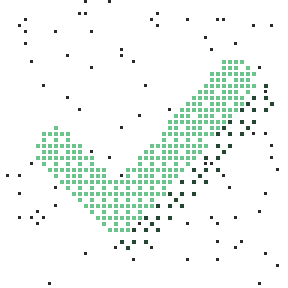
The evidence supports the claim.
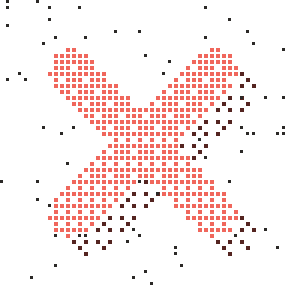
The evidence contradicts the claim.
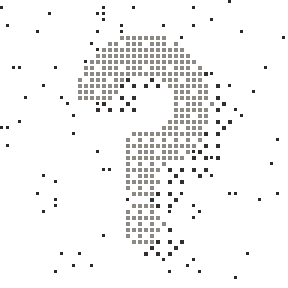
A judgement call. A named person decides.
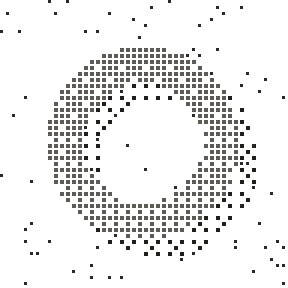
Nothing could run. Never counts as held.
The spec
Proof Request 0.1. Five rules.
A proof request is one JSON file, proof-request.json. A tool that follows the rules can say it produces or reads Proof Request 0.1.
Why
Nobody is reading PRs.
Agents open them faster than anyone can read them, and the tests that approve them come from the same agent.
get zero review comments. For Codex, 98%.
source: arXiv 2602.02345A unit test checks the code. A proof request checks the running app.
Questions
Before you run it.
Does my code leave my machine?
The judge never sees code. The tester drives your app on localhost, and only the evidence (screenshots, HTTP lines, console output) goes to the model you configure.
Does it replace my tests?
It replaces the tests your agent writes to agree with itself. Keep the tests that encode decisions you made. prq checks what the agent claims, on the running app, and you write no test files.
What does it cost?
Nothing to install. You pay your own OpenAI usage. The judge runs on the Decisions API, where output tokens are free and input is $0.10 per million. Browser steps cost more, and depend on how many claims you check.
Which agents does it work with?
Any agent that can run a shell command. prq init can add a Codex stop hook that runs it when a task ends. The agent reads the broken rows as JSON. You read the page.
Do I still read the diff?
It is there, one click away. A proof request is what you read first, and most days it is all you read.
Get it
Run it after your agent says done.
Works with Codex and any agent that can run a shell command. Open source. BYOK.